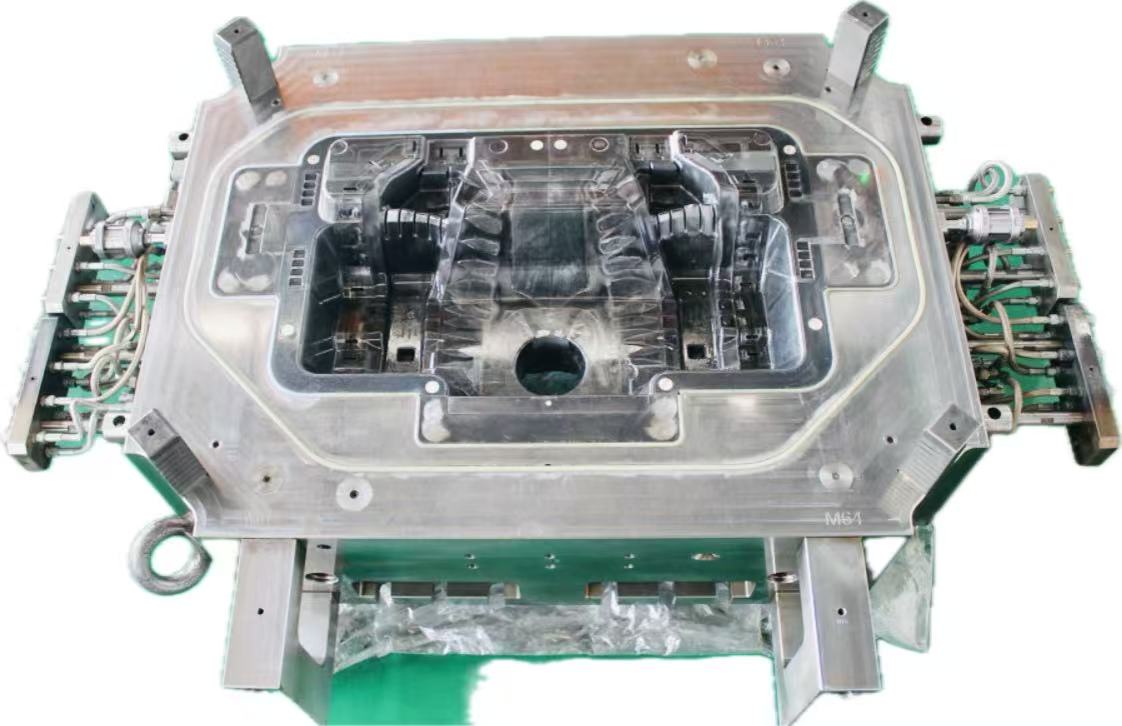
With the continuous recovery of the global manufacturing industry and the rapid development of emerging fields such as new energy, aerospace and intelligent equipment, the global mold market has ushered in a steady growth trend. Industry data shows that the market demand for key mold products such as Die Casting Die, Gravity Die Casting Mold, Hot Stamping Die and Low-Pressure Die Casting Mold is growing at a double-digit rate, while Patterns for Molding Line and Core Boxes, as supporting components, are also developing in tandem, forming a complete industrial chain and promoting the overall upgrading of the mold industry.
Die Casting Die, as one of the most widely used mold categories in the manufacturing industry, has made remarkable progress in precision and efficiency. With the popularization of automated production lines, modern Die Casting Die is equipped with intelligent monitoring systems, which can realize real-time monitoring of the forming process, effectively reduce product defects, and improve production efficiency by more than 30% compared with traditional molds. It is widely used in the mass production of automotive components, electronic products and hardware parts, becoming an important support for industrial mass production.
Gravity Die Casting Mold, with its mature technology and reliable performance, has become the preferred choice for many traditional manufacturing enterprises. It is especially suitable for the production of castings with complex shapes and high dimensional accuracy, such as engine parts, valve bodies and other products. In recent years, with the improvement of material technology, the service life of Gravity Die Casting Mold has been significantly extended, and its application scope has been further expanded to the fields of marine engineering and heavy machinery.
Against the background of the global pursuit of energy conservation and emission reduction, Hot Stamping Die has become a focus of technological innovation in the mold industry. By adopting advanced heat treatment technology and surface coating process, the wear resistance and high-temperature resistance of Hot Stamping Die have been greatly improved, which can meet the production needs of high-strength and lightweight materials. It has become an indispensable key equipment in the production of new energy vehicles and high-end automotive parts, helping enterprises reduce production costs and improve product competitiveness.
Low-Pressure Die Casting Mold, which is famous for its stable performance and high product qualification rate, has attracted more and more attention from the market. It solves the problems of uneven filling and high internal defect rate of traditional casting molds, and is widely used in the production of high-precision castings such as automotive hubs, aerospace components and precision instruments. With the continuous improvement of pressure control technology, the application field of Low-Pressure Die Casting Mold is still expanding.
As important supporting components in the casting process, Patterns for Molding Line and Core Boxes play a crucial role in ensuring casting quality. The newly developed Patterns for Molding Line adopts high-strength composite materials, which not only has high precision but also has strong wear resistance, adapting to the high-speed operation of automated molding lines and improving the consistency of casting products. Core Boxes, on the other hand, have realized personalized customization according to different casting needs. The optimized structural design makes the core removal process more convenient, shortens the production cycle, and provides strong support for the efficient production of castings.
Industry experts point out that the current global mold market is in a period of fierce competition and rapid development. The innovation and upgrading of Die Casting Die, Gravity Die Casting Mold, Hot Stamping Die and Low-Pressure Die Casting Mold, as well as the continuous optimization of Patterns for Molding Line and Core Boxes, will be the key to enterprises winning the market. In the future, mold enterprises will focus more on technological R&D and intelligent transformation, promote the integration of mold products with digital and intelligent technologies, and contribute more to the high-quality development of the global manufacturing industry.